01
Distributed field crews
Coordinate services across multiple reporting locations, shifts and changing work assignments.
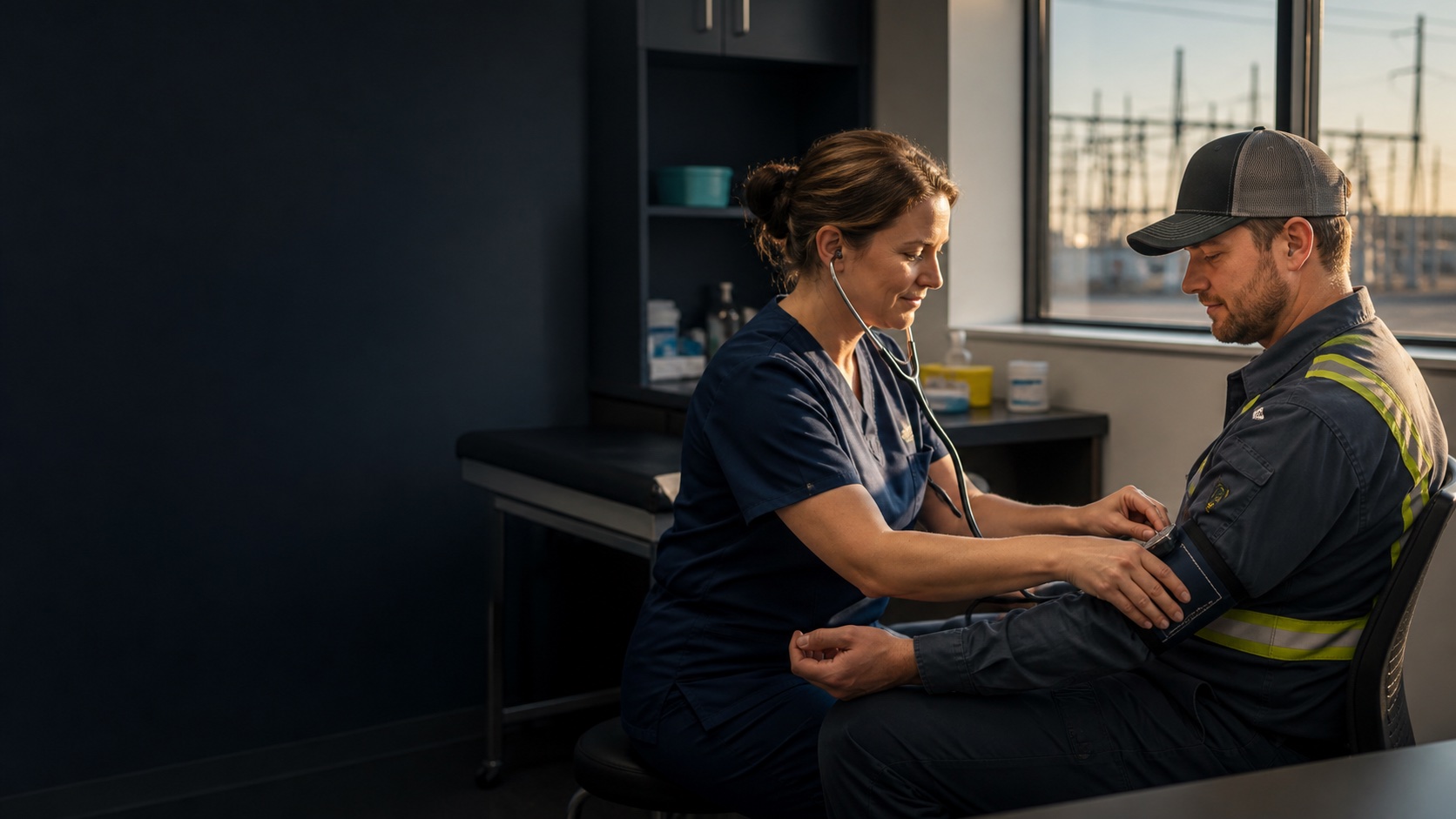
Energy + Utilities
Industry / 04Beeline coordinates occupational testing, medical readiness, surveillance and clinical access for energy and utility workforces across plants, field operations and project sites.
Built around the operation
Energy and utility teams may work across plants, substations, transmission systems, construction projects and emergency response. Beeline connects employer-defined requirements to qualified clinical partners and a delivery model that can reach employees where they are.
Operational realities
Beeline starts with the practical conditions that shape employee access, clinical scope and program delivery.
Coordinate services across multiple reporting locations, shifts and changing work assignments.
Build role-informed examination and testing workflows around the requirement identified by the employer.
Connect hearing, respiratory and hazard-specific surveillance to the employer's exposure program.
Plan scalable access for mobilizations, extended operations and accelerated staffing needs.
Recommended service stack
Final services depend on the employer's identified requirements, employee population, clinical protocols and available qualified partners.
Role-appropriate examinations, including DOT exams for covered commercial drivers.
Explore serviceMedical review followed by equipment-specific fit testing where required.
Explore serviceTesting that supports selected hearing, respiratory and surveillance programs.
Explore serviceProgram coordination for employer, project or applicable transportation requirements.
Explore serviceOn-site cardiovascular, metabolic and preventive programs for long-term workforce health.
Explore serviceTesting events, screening days and recurring clinical presence at selected locations.
Explore serviceProgram lifecycle
Map
Reach
Maintain
Respond
Delivery model
Consolidate testing and screening where enough employees can be reached safely and efficiently.
Coordinate appointments for field employees, new hires and services requiring a clinical setting.
Use virtual care for appropriate review, navigation and follow-up across a broad operating territory.
Program boundaries
The employer determines covered roles, hazards, emergency arrangements and the specific legal or contractual requirements that apply.
Beeline's services complement, but do not replace, required workplace safety programs, first-aid capabilities or emergency-response planning.
Medical decisions and work-status recommendations remain with appropriately qualified clinical professionals.
Common questions
Yes. Beeline can combine regional clinics, on-site events and appropriate virtual workflows under one coordination model.
Beeline can plan scalable exams and testing when scope, anticipated volume, locations and lead time are defined. Availability depends on the requested services and clinical resources.
No. The employer and its safety or legal advisors identify applicable standards and covered populations. Beeline operationalizes the requested clinical services.
Yes. Preventive screenings and workforce health days can sit alongside occupational requirements while maintaining separate clinical and reporting boundaries.
Start with the operation
Share the roles, workforce size, locations, desired services and dates. Beeline will coordinate an appropriate delivery path with qualified clinical partners.